A Messy Recipe for Growing Up in Lady Bird
Lady Bird is a film that centers around rebellious teen Christine McPherson and her complex relationships throughout her adolescent years. As the film plays we explore her coming of age story with ideas of identity, family, and ambition.

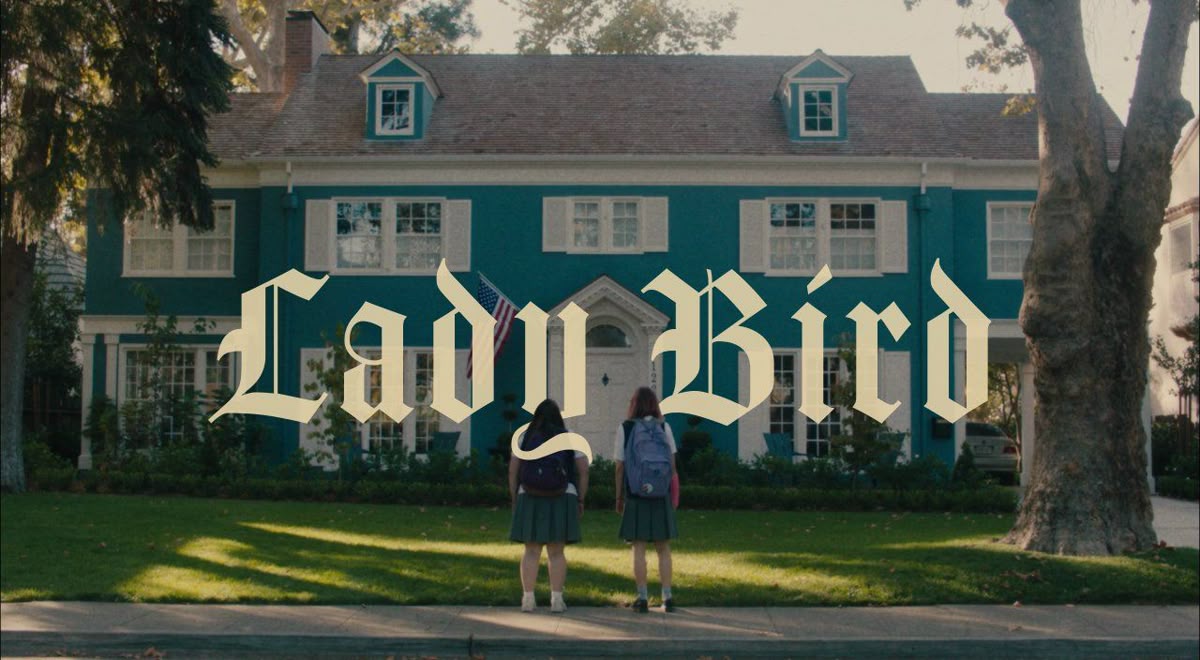
One thing that stands out about this film is the characterization of Christine McPherson, who wants to be known as Lady Bird. Instead of being written with typical good or bad characteristics, Lady Bird is a multi-faceted character whose morally-grey actions help portray her as realistic. This is especially apparent when she lies about her house in order to be seen as more wealthy. It shows her internalized shame about her class and desire to escape her situation. However, this action also clashes with what she regularly tells her parents when they push her—that she isn’t ashamed of them at all. This little action shows us her inner conflict of wanting to be seen as socially acceptable to her new ‘cool’ friends but also showing appreciation to her parents.
Her relationship with her mother is another complex relationship that is built on throughout the movie. Marion, Lady Bird’s mother, is a blunt and honest person with high expectations. Yet, her inability to communicate tenderness and constant stress leaves Lady Bird feeling inadequate. This contributes to Lady Bird wanting to leave her family and Sacramento as a whole. Rather than portraying either woman as right or wrong, the film dives in deeper by showing Lady Bird and Marion as people with ‘strong personalities’ who love each other deeply but also lack the emotional depth to properly communicate it.
We also see another relationship between Lady Bird and her friend Julie. Originally two very close friends, Lady Bird begins to distance herself with Julie in order to become friends with Jenna who is the ‘popular’ girl. As her relationship with Jenna progresses, Lady Bird realizes she longs for Julie as she feels she can be her true self. Their eventual reconciliation portrays the journey that is being a teenager. Through this process, Lady Bird learns more about herself and accountability as a whole, growing as a person.
The most important thing is that this film doesn’t portray any woman as simply good or bad. Even Jenna, the ‘popular’ girl who Lady Bird desperately tried to befriend isn’t portrayed as an evil antagonist. She is simply another human who is going through life’s journey. By embracing the flaws of humankind, the film Lady Bird, stands out uniquely as a realistic representation of life and the journey of growth.